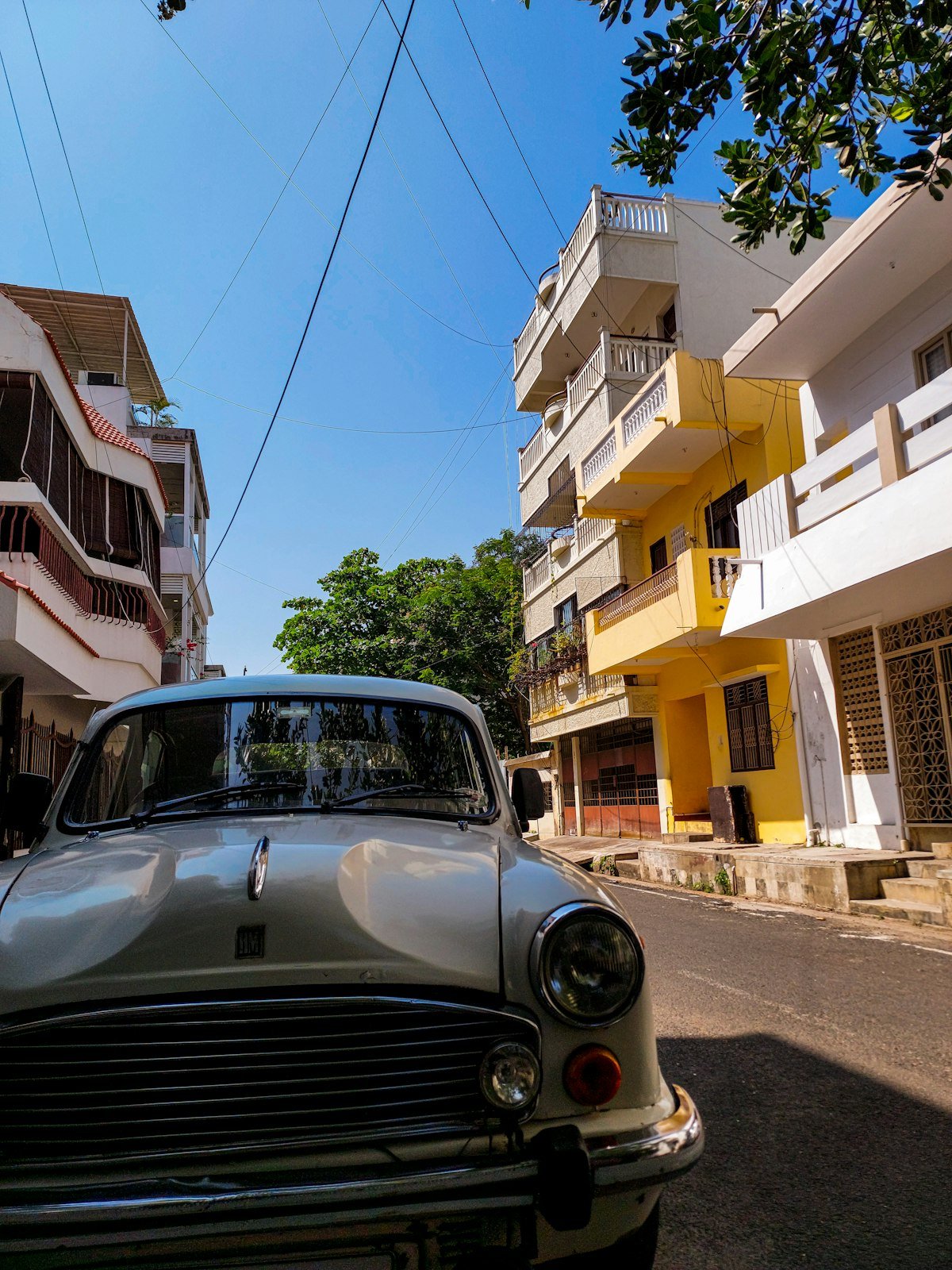
A two-bedroom apartment in Anjuna, North Goa, that rented for ₹22,000 a month in 2019 now costs ₹65,000 or more. Add utilities, a motorbike, and eating out twice a week, and you're spending close to what you'd spend in rural Portugal — except Portugal has the D7 visa, the EU healthcare system, and Schengen access. India has none of those things.
That doesn't mean India is wrong. It means the version of India that retirement blogs described five years ago — cheap Goa apartment, low cost of living, stretch your pension forever — is substantially less true than it was. The people who retire in India successfully in 2026 are the ones who went in with accurate information rather than 2018 blog posts.
This guide covers the actual visa situation (there is no retirement visa, and most guides bury this), how the 182-day rule determines your entire tax position, where the real expat communities are now, and what a realistic budget looks like across the destinations where Westerners actually live.
The visa gap: India has no retirement visa
This is the single biggest structural difference between India and every other popular retirement destination. Portugal has the D7. Panama has the Pensionado. Malaysia has MM2H. Mexico has the Residente Temporal. India has nothing equivalent for foreigners without Indian heritage.
What you actually have access to depends on your nationality and background.
The tourist e-Visa
Most Western nationalities can get an Indian e-Visa online in a few days. The standard tourist e-Visa allows two entries and a maximum stay of 90 days per visit, up to 180 days total in a calendar year. A 1-year multiple-entry e-Visa also exists for some nationalities, still capped at 90 days per stay.
The practical reality: you arrive, stay 90 days, leave (Sri Lanka and Nepal are the popular exits), come back. Repeat. This works for people who genuinely want to split their time between India and elsewhere. It is not a viable basis for full-time retirement.
The 10-year multiple-entry visa (UK and some others)
UK passport holders can apply for a long-term standard visitor visa valid for 10 years with multiple entries, each stay up to 180 days. This is the closest thing to a long-stay option for British retirees without Indian heritage. It still doesn't permit work, and it doesn't resolve the 182-day tax residency question — more on that below.
The OCI card: the real solution, with a catch
The Overseas Citizen of India card is the gold standard. It gives you lifetime multi-entry, no restrictions on length of stay, the right to work, and the ability to buy most categories of property. It looks like the retirement visa India doesn't formally offer.
The catch: you can only get it if you are of Indian origin (or were an Indian citizen), or if you are the spouse, parent, or grandparent of someone who qualifies, or the spouse of an OCI cardholder. If you have no Indian family connection at all, the OCI route is closed to you.
A meaningful portion of Western retirees in India — particularly UK retirees — do have that connection. The British Indian community is large. Plenty of people hold British passports and have a parent or grandparent who was an Indian citizen. For them, India is genuinely viable in a way it isn't for someone with no Indian background whatsoever. The full OCI card guide covers eligibility, the property rules in detail, and the 2026 digital application system.
The 182-day rule: how your tax position works
India's financial year runs April 1 to March 31. Spend more than 182 days in India in a financial year and you become a tax resident. Spend fewer than 182 days and you are a Non-Resident Individual (NRI) for Indian tax purposes.
The distinction matters enormously.
As a non-resident, India only taxes your Indian-source income — interest on Indian bank accounts, rental income from Indian property, capital gains on Indian investments. Your UK State Pension, your SIPP withdrawals, your US 401(k) distributions: India doesn't touch any of them. If you manage your days carefully and stay under 182, your Indian tax bill can be close to zero.
As a tax resident, India taxes your worldwide income. That pension you've spent 35 years building in the UK or the US is now subject to Indian income tax rates. The current rates for resident individuals in 2026:
| Taxable income (INR) | Rate |
|---|---|
| Up to ₹3,00,000 | Nil |
| ₹3,00,000 – ₹7,00,000 | 5% |
| ₹7,00,000 – ₹10,00,000 | 10% |
| ₹10,00,000 – ₹12,00,000 | 15% |
| ₹12,00,000 – ₹15,00,000 | 20% |
| Above ₹15,00,000 | 30% |
A 4% health and education cess applies on top of the calculated tax. Surcharges apply at higher income levels.
At the July 2026 exchange rate of approximately ₹105 per pound, a UK pension of £20,000/year is roughly ₹21,00,000 — well into the 30% band. On paper, that's a significant tax liability for a full-year India resident drawing a UK pension.
The UK–India tax treaty: what it actually says
The UK and India have a Double Taxation Agreement that prevents the same income being taxed twice. What it says about pensions matters.
Government service pensions — civil service, NHS, military, teachers' pensions from local authorities — are taxable only in the UK, not India. If your pension comes from UK public service, you will not owe Indian tax on it regardless of your residency status in India.
Private pensions — SIPPs, personal pensions, most occupational pensions from the private sector — are taxable in the country where you are resident. If you are a tax resident in India, your private UK pension is taxable in India under the treaty. The UK generally won't tax it too (the treaty prevents that), but India will.
UK State Pension is treated as a pension under Article 17 of the treaty — generally taxable in the residence state. So a tax-resident retiree in India would, in principle, pay Indian tax on their State Pension too.
The practical outcome for many UK retirees: if they have a government service pension and manage their days to stay under 182, Indian tax doesn't enter the picture at all. If they have a private pension and spend more than 182 days in India, they face Indian tax rates on that income and need to structure their affairs carefully.
The US–India position
US citizens face the same 182-day rule in India but with an additional complication: the US taxes its citizens on worldwide income regardless of where they live. Even if India taxes you as a resident, the IRS still wants a return.
The saving mechanism is the Foreign Tax Credit. If India charges more tax on your income than the US would have, you credit Indian tax paid against your US liability and owe the IRS nothing extra. Since India's top rate is 30% and most US retirees' pension income sits in the 12–22% federal bracket, Indian tax typically covers the US bill entirely with credits to carry forward.
The complication is US Social Security. Under the US-India treaty (signed 1989), the treaty's pension article generally allocates taxing rights to the residence state — so India can tax Social Security if you're a resident there. But the US also retains some taxing rights on Social Security under domestic law, and the interaction between the two is genuinely messy. If you're a US citizen with Social Security and considering India full-time, you need a cross-border tax adviser. This is not a DIY area.
How India compares: the tax reality at ₹25 lakh income
To make the numbers tangible, here's how India compares to Portugal post-NHR and Panama for a retiree with the equivalent of roughly £24,000 / $30,000 per year in pension income (₹25,00,000 at current rates):
| India (tax resident) | India (<182 days) | Portugal | Panama | |
|---|---|---|---|---|
| Tax on foreign pension | ~25% effective | ~0% | ~22% effective | 0% |
| Retirement visa | None (OCI if eligible) | Tourist visa cycling | D7: €920/mo income | Pensionado: $1,000/mo |
| Visa permanence | OCI: permanent; else temporary | Temporary, cycling | Temporary, renewable | Permanent day 1 |
| Healthcare | World-class private (cheap), patchy public | ← | SNS (public) + private | Good private, affordable |
| Property ownership | No (OCI/NRI: limited) | No | Yes | Yes |
| Cost of living (couple/mo) | $900–2,500 | ← | €1,400–3,200 | $1,500–2,500 |
The sub-182-day column is where India looks uniquely attractive: very low taxes (only on Indian-sourced income, which most retirees have little of), and costs significantly below Portugal or Panama. The trade-off is that you're not really living there — you're an extended tourist, leaving every few months.
Where people actually live: Goa and the alternatives
Goa: still the largest expat community, but no longer cheap
North Goa — Anjuna, Vagator, Assagao, Candolim — is now expensive by Indian standards. That ₹22,000 apartment is gone. What replaced it is a rental market shaped by digital nomads with tech salaries, short-term platforms charging tourist rates for long-term stays, and an expat community large enough to have created its own pricing tier.
A decent two-bedroom in the Anjuna-Vagator area runs ₹60,000–90,000 per month. Add a motorbike (₹5,000–8,000/month rental), groceries, and eating out half the time, and a couple in North Goa comfortably spends $2,000–2,800 per month. That's not India pricing. That's the same bracket as Lisbon's cheaper suburbs.
South Goa — Palolem, Agonda, Patnem — is calmer and cheaper: ₹35,000–55,000 for a two-bedroom. Better if you want actual village life and are willing to go further from the airport and the restaurants. The expat community is smaller but the pace is noticeably different.
Goa also has a seasonal problem that surprises people. May and June are brutal — 35°C, oppressively humid, and the monsoon arrives mid-June with flooding and road closures. Most long-term expats leave for two to four months every year. Some go to the mountains. Some go back to the UK or Germany. The ₹25,000/month apartment is available again because no foreigner wants it in August.
Pondicherry: the one that makes sense in 2026
Pondicherry — officially Puducherry — is a former French colony on the Tamil Nadu coast, about 160km south of Chennai. The French Quarter has wide leafy streets, ochre and white colonial buildings, a working lighthouse, and a cafe culture that feels genuinely French rather than themed. It also has Auroville 10km up the road, an international intentional community founded in 1968 that has its own permanent population of several thousand people from 50+ countries.
The French connection is real: Air France maintains services to Chennai, and the city has a French consulate and French school. A significant proportion of long-term Western residents are French nationals, which shapes the restaurant scene and the social life in useful ways.
Prices are substantially lower than Goa. A two-bedroom apartment in the French Quarter or the quieter White Town area: ₹20,000–40,000 per month. English is widely and comfortably spoken. The quality of life — clean streets by Indian standards, good bakeries, a calm sea promenade, serious yoga culture — is high relative to cost.
The limitations: it's hot (Tamil Nadu coast doesn't have Goa's sea breeze), the nightlife barely exists by Goa standards, and the nearest international airport with broad connectivity is Chennai. Not a dealbreaker. But relevant if your priority is easy flights home.
Kerala: the healthcare argument is real
Kerala has the best healthcare infrastructure of any Indian state outside the four metro cities. That matters when you're not 35. Literacy is near-universal. English is genuinely good. The state government has historically invested heavily in public services — it shows.
Fort Kochi is the main expat hub — a small peninsula in Kochi city with Dutch, Portuguese, and British colonial architecture, Chinese fishing nets, and an art scene. Two-bedroom apartments: ₹20,000–45,000 per month depending on location and quality. The international airport at Kochi connects to Dubai, Singapore, and direct to a handful of UK and EU cities.
Varkala and Kovalam attract a different type — beach-focused, more transient, strong yoga and Ayurveda infrastructure. Cheaper than Fort Kochi. Less of a permanent expat base, more of a stopping point on a longer journey.
The downside of Kerala: June to August monsoon is serious. More serious than Goa. The rain is not background noise — it's a proper flood season. Most long-term residents plan around it.
Himachal Pradesh: for people who don't want the heat
Dharamsala and McLeod Ganj in Himachal Pradesh are the Tibetan cultural capital in exile — the Dalai Lama has lived there since 1960. The town is small, the altitude is around 1,400m, and the Dhauladhar mountain range sits directly behind it. In summer, when the plains bake at 45°C, McLeod Ganj is 25°C.
The Western residents here are a specific type. Meditation practitioners, long-term Buddhist students, people who want a mountain life with an international community. It's not for everyone. The infrastructure is limited, the roads are difficult, and the tourist season (May to October) brings crowds that disappear in winter when temperatures drop sharply.
Cost of living is very low. A two-bedroom apartment: ₹12,000–25,000 per month. A couple can live comfortably on $800–1,200 per month including occasional travel. For the right person, it's exceptional value. For someone who wants good restaurants and ease of travel, it's the wrong place.
Mysuru: the underrated one
Mysuru (Mysore) in Karnataka is India's most liveable city by several surveys and has been for years. It's a former royal seat with wide boulevards, a functioning palace, and a serious Ashtanga yoga tradition — the K. Pattabhi Jois lineage originates here, and the city still attracts yoga practitioners from around the world.
English is good. The climate is pleasant year-round by Indian standards (900m elevation, no coastal humidity). Two-bedroom apartment: ₹15,000–30,000 per month. A couple lives well on $1,000–1,500 per month.
The gap: it's not a beach destination and it doesn't have a large established expat community the way Goa does. People who choose Mysuru have usually been to India before and know what they want from it.
Who retires in India and where they come from
UK nationals are by far the largest Western retirement group in India. The British Indian community is the largest Indian diaspora in Europe, and people with Indian heritage holding British passports have OCI card access — which changes the entire visa equation. Beyond the diaspora, India's historical connection to Britain means English is genuinely functional everywhere expats tend to live.
Germans are the second-largest European group, concentrated in Goa and Himachal Pradesh. The Goa connection is decades old — German visitors discovered North Goa in the 1970s alongside British and Israeli travellers, and a community formed that persists. Himachal attracts Germans with an interest in Buddhist practice.
Israelis are disproportionately represented for their population size. The post-army travel tradition sends large numbers of young Israelis to India, Goa especially, and some stay long past their twenties. The Israeli community in Goa is well-established enough to have its own restaurants, a synagogue in Panjim, and Hebrew signage in parts of North Goa.
French nationals cluster in Pondicherry more than anywhere else — the historical and linguistic connection makes it the logical choice. Americans are comparatively rare. The worldwide income taxation obligation and the FBAR/FATCA reporting requirements make India administratively complex for US retirees, and the lack of a retirement visa is a harder problem for a US passport holder who typically doesn't have Indian ancestry.
Australians are a growing presence, primarily those with Indian heritage — India is the second-largest source of Australian immigration, and the Australian Indian community produces a significant number of people with OCI card eligibility retiring to India in their 60s and 70s.
Cost of living: what a realistic monthly budget looks like
The figures below are for a couple living in rented accommodation in 2026, including rent, utilities, groceries, eating out regularly, local transport, and basic health insurance. Excludes flights home and major health events.
| Location | Monthly budget (couple) | 2-bed rent | Notes |
|---|---|---|---|
| North Goa (Anjuna/Vagator) | $1,900–2,800 | ₹60,000–90,000 | Expensive by Indian standards. Best infrastructure. |
| South Goa (Palolem/Agonda) | $1,400–2,000 | ₹35,000–55,000 | Quieter, cheaper, smaller expat community. |
| Pondicherry | $900–1,500 | ₹20,000–40,000 | Best value with good quality of life. Growing expat base. |
| Fort Kochi, Kerala | $1,000–1,600 | ₹20,000–45,000 | Best healthcare access. Good English. Direct flights. |
| Mysuru | $900–1,400 | ₹15,000–30,000 | Most liveable city for quality-of-life ratio. No beach. |
| Dharamsala/McLeod Ganj | $700–1,200 | ₹12,000–25,000 | Cheapest option. Mountain setting. Limited infrastructure. |
Exchange rate as of July 2026: approximately ₹83 per US dollar, ₹105 per pound sterling.
Healthcare: the genuine good news
India's private healthcare is exceptional in major cities and major towns — and exceptionally cheap compared to the US or Europe. Apollo Hospitals, Fortis, Max, and Narayana Health all operate to international standards. A consultation with a specialist costs ₹800–2,000 ($10–25). A hip replacement at a top-rated Apollo facility costs roughly $5,000–7,000. The same procedure in the UK private system: £15,000–20,000. In the US: $40,000+.
The caveat is geography. In Dharamsala, the nearest hospital with proper surgical capability is a long drive. In Gokarna or Palolem, you need to plan for a journey to a city hospital. In Fort Kochi or Pondicherry, you have good facilities close by. Healthcare quality is tightly linked to where in India you live.
International health insurance is strongly advisable regardless — both for medical evacuation coverage and for continuity if you split time between countries. Providers like Cigna Global, AXA PPP, and Bupa International cover India, with annual premiums for a couple in their 60s running roughly $3,000–6,000 depending on coverage level and where you live.
Property: you can't own it
Foreign nationals without OCI or NRI status cannot own property in India. Full stop. You can rent indefinitely, but you cannot buy a flat in Goa or a house in Pondicherry. This is a material difference from Portugal, where the D7 visa comes with full property rights from day one, or Panama, where foreigners own property on the same terms as citizens.
OCI cardholders can buy most residential and commercial property but not agricultural land or plantation property. For the significant portion of UK, Australian, and other retirees who hold OCI cards, this restriction largely doesn't apply in practice. For everyone else, renting is the only option for life.
Banking and money: the practical obstacles
Opening an Indian bank account as a foreign national without a long-term visa is difficult. Banks require proof of address, a long-stay visa, and often a local guarantor. Most expats on tourist visa cycles manage on a combination of international bank cards, ATM withdrawals, and digital payments through UPI (India's payment system). UPI is now accessible to foreign visitors through select apps, but it's not seamless for someone operating primarily on a foreign card.
Transferring money into India is straightforward via Wise or similar. Transferring money out requires a Tax Clearance Certificate if you're a resident — another reason many Westerners deliberately manage their days to stay non-resident.
What most retirement guides miss
The seasonal migration is real and affects your calculations. Almost no Western expat lives in India year-round. May to October is brutal in coastal areas — the heat before the monsoon, the flooding during it, the mould and humidity after. Most people leave for two to four months. This isn't a failure of the retirement plan; it's how India works. You plan two homes: India for October to April, somewhere cooler (or home) for the rest.
The implication for tax: a lifestyle that involves leaving India for four to five months a year often results in spending fewer than 182 days in India in a given financial year. Accidentally or deliberately, many Western expats in India end up as non-residents for Indian tax purposes, which dramatically simplifies their tax position.
Connectivity has genuinely improved. Jio's 5G network now covers all the major expat areas. Working remotely from Anjuna or Pondicherry is no longer the intermittent-connectivity struggle it was five years ago. This is one reason the digital nomad influx happened — it's now practically viable in a way it wasn't before. It also partly explains the Goa price inflation.
Air quality in northern India is genuinely bad. Delhi runs above WHO safe limits for most of the year — the AQI in winter regularly hits 300–400, which is hazardous. If you're in your 60s with any respiratory history, this is not a minor inconvenience. Dharamsala is in the mountains and largely exempt. Pondicherry, Goa, and Kerala all have acceptable air quality. This mainly becomes relevant if you're considering Bengaluru or Mumbai as a base — cities some expats choose for their international infrastructure — but it should rule out Delhi NCR entirely for most retirees.
Is India the right choice?
India rewards people who already know they love it. It is not the kind of country you move to because it's cheap and you're flexible about destination. The bureaucracy, the visa cycling, the heat, the need to adapt your daily rhythm entirely — these are not background noise. They're the texture of the experience.
The people who retire in India well are drawn by something specific: the Buddhist community in Dharamsala, the yoga tradition in Mysuru, the French culture in Pondicherry, the beach and the food and the noise of Goa. They've been going there for years. They have friends there. They know what August smells like in a coastal town. India as a vague retirement concept doesn't work. India as a specific place you already know — that can work very well indeed.
The financial case is strongest for two groups: OCI holders who can own property, maintain full legal residency, and access all the cost advantages India offers; and non-residents who split their time, keep their days under 182, and treat India as a very long and cheap winter. For everyone in between, the visa gap creates a structural instability that the other popular retirement destinations don't have.
The 2021 vs 2026 cost of living comparison shows India's Numbeo index at 24.3 — among the lowest in the world, compared to 38.0 for Vietnam, 42.6 for Mexico, and 48.8 for Portugal. The cost advantage is real and it's large. Whether the visa situation lets you access it depends on who you are.
Model your actual numbers before you decide. The US retirement calculator for India compares your numbers as a US tax resident against an India tax resident side by side, handles Indian rupee as a drawdown currency, and supports NPS, PPF, and EPFO account types alongside a 401(k) or IRA. The expat retirement planning guide covers the broader tax treaty framework in more detail. Run the numbers for your specific pension sources and income level — at the margin between non-resident and resident status, the Indian tax outcome changes dramatically.
Model your retirement income in India
Enter your UK State Pension, SIPP, US Social Security, 401(k), or any other income source. Switch the drawdown currency to INR and see the year-by-year picture in rupees.
Open the India Calculator